The art of the khat
The square is easy to draw.
It is much harder to weave.
Kota Doria is known for its delicate open structure and characteristic square khat. The pattern is not printed onto the cloth. It is created by the arrangement, density and movement of its threads.
Kaithun · Kota · Rajasthan
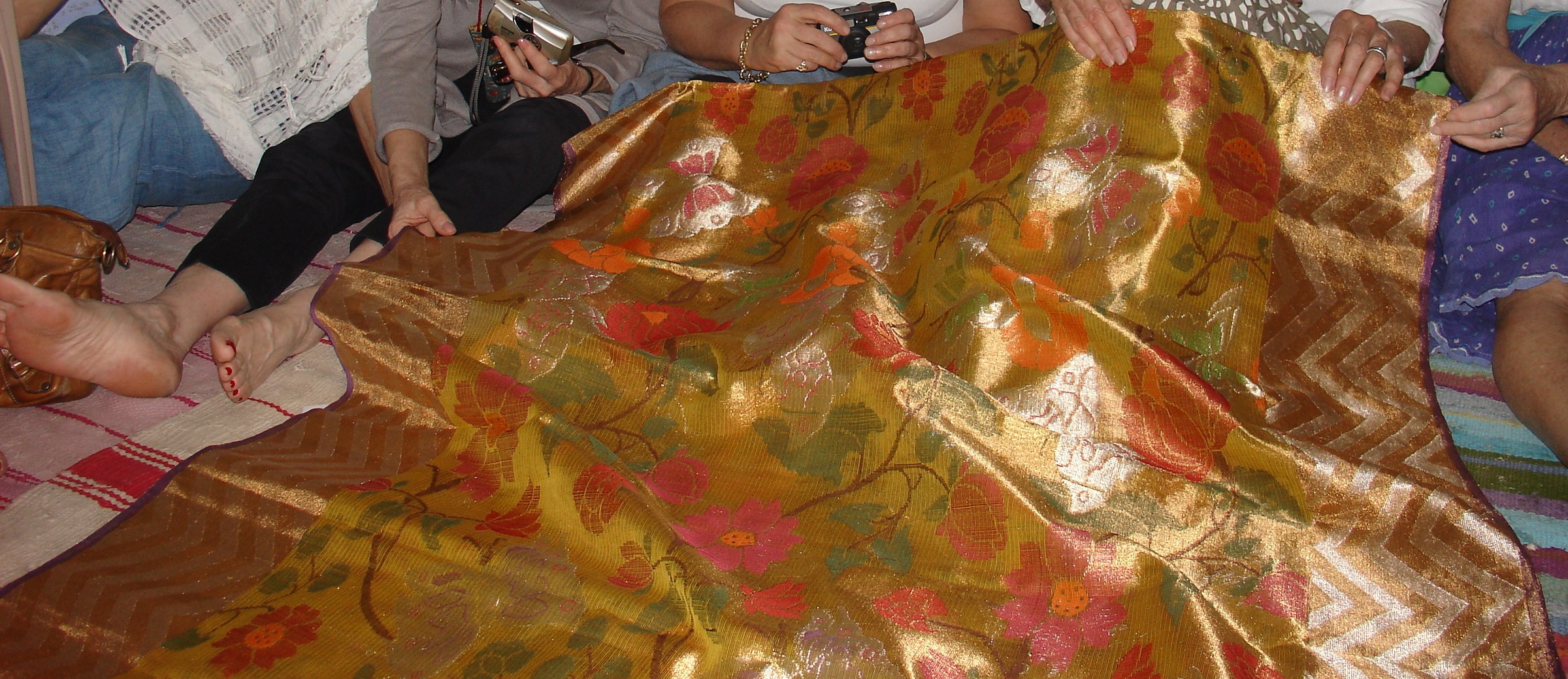
A textile built from thread
Where pattern becomes structure.
Kota Doria is a lightweight handwoven textile associated with Kota and the surrounding Hadoti region of Rajasthan. Its defining feature is the khat — the small square structure created within the weave itself.
What appears delicate is technically precise. Cotton and silk are arranged, tensioned and beaten into an open structure that gives the cloth its characteristic lightness, transparency and drape.
The exact beginnings of the craft are not recorded with certainty. Historical accounts describe an older regional tradition of fine cotton weaving alongside traditions of southern Indian weavers coming to Kota under royal patronage.
Kaithun
A craft rooted in a place.
Kaithun, near Kota in Rajasthan, became the principal historic centre of Kota Doria weaving. Here, weaving developed as a household craft, with knowledge and skills passed through generations.
- Kaithun
- Kota District
Rajasthan, India
The khat
The square is woven in.
The characteristic khat is created by the structure of the weave itself. In the traditional cotton-silk construction documented in the Kota Doria GI specification, each khat is formed from 14 threads: 8 cotton and 6 silk.
The beauty is structural. The checks are not simply placed on top of the fabric; they emerge from the relationship between warp, weft, yarn density and the weaver's control of the loom.
Cotton
Structure.
Softness.
Strength.
Cotton provides much of the structure and strength of the open weave.
Silk
Light.
Lustre.
Translucency.
Silk contributes softness, sheen and translucency.
Together, they create a fabric that feels exceptionally light while retaining a distinctive woven structure.
From thread to cloth
Before the loom
- 01
Winding
Yarn begins as hanks and is transferred onto pirns or spools prepared for weaving.
- 02
Warping
Kaithun's documented tradition includes peg warping, where yarn is stretched around wooden pegs to establish the warp.
- 03
Dyeing
Cotton and silk yarn may be dyed before weaving, depending on the fabric and design.
- 04
Sizing
Cotton warp yarn is sized to give it the strength and stiffness required to withstand the beating of the reed.
- 05
Drafting & denting
Threads are passed through the heddles and reed according to the required structure and design.
- 06
Weaving
The prepared warp finally enters the loom, where the weaver controls the shuttle, tension and beating.
Peg warping
Before the cloth exists, the geometry begins.
Peg warping establishes the length and arrangement of the warp before it reaches the loom. The crossed arrangement also helps identify broken yarns later during weaving.
The loom
The loom is simple. The skill is not.
Traditional Kota Doria weaving is associated with pit looms and the throw-shuttle technique. The weaver controls the movement of the shuttle and the beating of the reed directly.
Human control
Every movement matters.
The characteristic structure does not come from a single mechanical setting. The weaver manages the rhythm of the loom: the shuttle, the tension of the threads and the force with which the reed is beaten.
Small differences in movement can change the balance of the open structure. Skill accumulated through generations is part of what makes the fabric possible.
Design
From drawing to weave.
Traditional design development can begin on graph paper, where motifs are translated into the grid and then interpreted through the loom's structure.
The weaver's view
The cloth is understood from both sides.
In documented Kota Doria weaving practice, some weavers work from the reverse side and check the developing design as the structure is built.
A living craft
Not an artifact. A living tradition.
Kota Doria is still woven today, particularly around Kaithun and other parts of the Kota region. The craft exists through working households, skilled weavers, supporting craftspeople and organizations that continue to develop its market and knowledge.
Its history is therefore not finished. The challenge is to allow a traditional textile language to continue without reducing it to a decorative memory of the past.
Geographical indication
Recognized to a place.
Kota Doria is a registered Geographical Indication in India. The GI application was filed in 2004 and the registration certificate was issued on 5 July 2005.
- Kota Doria
- Registered GI
- Application
- No. 12
- Certificate
- No. 8
- Registered geographical area
- Rajasthan
The Dorian Nocturne
An old textile. A new ritual.
For The Dorian Nocturne, Kota Doria becomes part of a contemporary nightwear ritual.
On the outside, the open woven structure brings the lightness, transparency and tactile character that make the textile distinctive. Inside, our construction uses 100% cotton cambric as the inner layer.
This is our contemporary interpretation, not a historical reconstruction.
Different time. Different purpose. The same respect for the thread.
Every thread has human touch.
Made slowly enough to remember.
The Dorian Nocturne
Image sources & acknowledgements
Photograph: Victoria Singh
Source: Wikimedia Commons
License: CC BY-SA 4.0
Resized and responsively cropped from the original photograph. No endorsement by the creator or source is implied.